Author: sskc-admin

  • Now Available: Zachary: The Invisible Veil

    Now Available: Zachary: The Invisible Veil Zachary

    Short Bio of Your Sensei
    Sensei AW Statz is a Canadian writer, teacher, and martial artist with over thirty years of experience in both education and the dojo. He has taught literature, mythology, and history, coached hundreds of karate students, and worked in places as varied as steel mills and lumberyards.

    That wide range of experience—and one lingering question, What are young people really searching for?—inspired his first novel, Zachary: The Invisible Veil, a YA fantasy that weaves together spiritual depth, myth, and adventure.

    Sensei still teaches karate weekly and, when not writing, can be found coaching in the dojo, reading mythology with coffee in hand, or sidestepping metaphorical roundhouse kicks from his students…and occasionally, his editors.

    As a new author, choosing the right editor is a leap of faith—and choosing Kristen Hamilton was the best decision I could have made. From her first 500-word sample to her final note on “the last confusing sentence,” Kristen brought professionalism, clarity, and genuine care to every step. Her developmental insights were sharp, her line edits precise, and her encouragement steady. She didn’t just edit Zachary: The Invisible Veil—she elevated it.

    —Andrew Statz, Zachary: The Invisible Veil


    A Note for Families
    Over the years, many Christian families have come through our karate doors. While I’ve had the occasional thoughtful conversation about philosophy or values, I’ve always respected that spiritual formation begins at home. I believe a child’s beliefs—whatever their background—are best nurtured within the family. Faith, to me, is personal. It’s not for debate, but for quiet reflection, resilience, and growth.

    That’s why Zachary: The Invisible Veil doesn’t preach—it invites. It’s not a sermon—it’s a story. One that opens the imagination, stirs the heart, and asks: What if there’s more to this world than we see?

    In a world that often demands quick answers, this book dares to be patient. And history reminds us—the pendulum always swings back. The key is to be ready.

    —AW Statz


    What’s Zachary About?

    Zachary: The Invisible Veil — Synopsis

    Sixteen-year-old Zachary Switch thought he was on track for university. He had the academic record his mother hoped for. What he didn’t know was that his adoptive father, Dr. Theo Switch, had very different plans—and heavenly agents were already involved.

    Zachary is taken to the Guardian Academy, a hidden school for the children of angels. There, he discovers he is a Nephilim—descended from angels—and is plunged into a world he never imagined. Alongside his friends Rachel and Neil, Zachary is tested by the Nephilim Council, trained in battle, and given a mission that could shape the fate of the world.

    But their mission isn’t just dangerous—it’s personal. If they fail, Rachel and Neil risk being lost to the shadows beyond the Veil. As they travel to Jerusalem with Zachary’s father, truths are revealed. When the mission ends, Dr. Switch doesn’t return.

    In the months that follow, the Nephilim Council begins to question whether Zachary’s loyalties—and bloodline—pose a threat. What they discover is bigger than anyone expected: Zachary’s real father is the Angel of Death.

    And the story is just beginning. If you’d like to peek at the listing, here’s Amazon’s “Look Inside”: 

    📖 Available now on Amazon — Find Zachary: The Invisible Veil on Amazon

  • South Surrey Karate Club Location, Times and Fees*

    South Surrey Karate Club — Location, Training Times & Fees

    Traditional Japanese Karate for Children, Teens and Adults

    Looking for karate classes in South Surrey?

    South Surrey Karate Club welcomes beginners ages 7 and older, teenagers, adults, and families who want to learn traditional Japanese karate in a friendly, supportive environment.

    Our experienced instructors emphasize good technique, confidence, self-discipline, respect, and personal improvement.

    Your first introductory class is FREE!

    Where We Train

    Pacific Heights Elementary School — Gymnasium
    17148 26 Avenue
    Surrey, BC

    All regular classes are held at Pacific Heights Elementary School.

    Class Schedule

    Day Juniors / Beginners Seniors / Advanced
    Monday 5:00–6:00 p.m. 5:00–7:00 p.m.
    Wednesday 5:00–6:00 p.m. 5:00–7:00 p.m.
    Friday 5:00–6:00 p.m. 5:00–6:30 p.m.

    Students may train up to three times per week.

    Please check our club blog for occasional schedule changes or school facility closures.

    Monthly Training Fees

    $130 per month — First student

    $120 per month — Second family member

    Monthly fees are payable during the first week of each month.

    Payment can be made by e-transfer to statzandrew8@gmail.com or by cash at the club.

    All students must maintain current Karate BC membership and insurance. This is a separate annual expense.

    What Do Beginners Need?

    You don’t need a karate uniform for your first class.

    Simply wear comfortable athletic clothing, such as track pants and a T-shirt. Bare feet are required for training.

    Our instructors will introduce you to the basics and help you feel comfortable participating.

    Ready to Try Karate?

    You don’t need previous martial arts experience, exceptional flexibility, or special athletic ability.

    You just need a willingness to learn.

    Your first class is free, with no obligation to join.

    Email statzandrew8@gmail.com to arrange your introductory class.

    South Surrey Karate Club
    Train with attention. Train with patience. Train with purpose.

    IMG_1147 IMG_8704


  • Karate

    Join South Surrey Karate Club Today!

    Your Karate Journey Begins with One Free Class

    Have you ever considered karate for yourself or your child?

    At South Surrey Karate Club, we believe karate is for everyone.

    You don’t have to be particularly athletic, flexible, or confident to begin. Those are qualities that can develop through training.

    What matters is showing up, listening, practising, and being willing to improve.

    Beginners ages 7 and older are welcome. Adults and families are encouraged to join too!

    Why Train with Us?

    Traditional Japanese karate offers much more than learning how to punch, kick, or defend yourself.

    Our students work toward developing:

    • Confidence — Discovering what they can accomplish through practice.
    • Respect — Learning to appreciate instructors, fellow students, and themselves.
    • Discipline — Developing concentration, self-control, and good training habits.
    • Physical fitness — Improving balance, coordination, flexibility, and strength.
    • Perseverance — Learning that improvement comes through patience and effort.

    We recognize that every student develops at a different pace.

    Some learn quickly. Others need more time and encouragement. Both belong in the dojo.

    We don’t expect perfection. We encourage effort.

    Experienced Instructors Who Care About Teaching

    Our club is led by:

    Sensei Andrew Statz — 6th Degree Black Belt

    A retired schoolteacher, experienced coach, and lifelong martial artist with extensive training in karate, judo, and jujitsu.

    Sensei Jim Hawkins — 4th Degree Black Belt

    An experienced Shotokan karate instructor who brings technical knowledge, patience, and encouragement to every class.

    Together, we work to create a training environment where students feel welcome, challenged, and supported.

    Families Can Train Together

    Karate offers a wonderful opportunity for parents and children to share an activity.

    Training together encourages mutual respect, strengthens family connections, and gives everyone a chance to experience the satisfaction of learning something new.

    And karate isn’t just for children. Adults of all ages can benefit from regular training.

    Your First Class Is Free!

    We invite you to experience our club before deciding whether to register.

    Getting started is simple:

    1. Contact us to arrange your introductory class.
    2. Come to the dojo wearing comfortable athletic clothing.
    3. Meet our instructors, participate in a beginner-friendly class, and see whether karate is right for you.

    There is no obligation to join after your introductory lesson.

    Come Train with Us!

    South Surrey Karate Club
    Pacific Heights Elementary School
    17148 26 Avenue, Surrey, BC

    Beginners: Monday, Wednesday and Friday, 5:00–6:00 p.m.

    Email: statzandrew8@gmail.com

    Your first class is FREE.

    Contact us today to arrange your introductory lesson!

    Everyone begins somewhere. Your karate journey can begin here.

    Sensei Andrew Statz & Sensei Jim Hawkins
    South Surrey Karate Club

  • New Students learning basic karate at South Surrey Club and more..

    New Students learning basic karate at South Surrey Club and more..

    IMG_8704

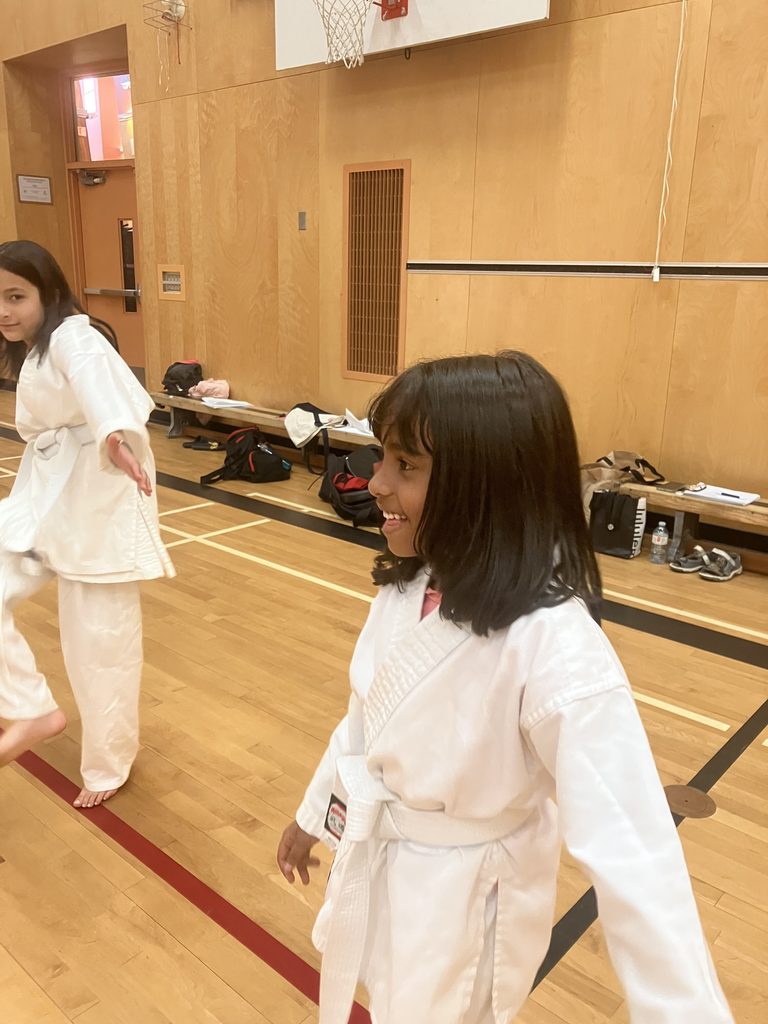
    We are welcoming new students to karate. Classes will be at Pacific Heights Elementary School beginning at 5 pm on Monday, Wednesday and Friday. Classes  run for one hour, in an air conditioned, friendly environment. Beginners are welcome to come and try out karate. Wear loose clothing, if it’s your first time.

    Venue Pacific Heights school gym

    Fees $130 / month per student

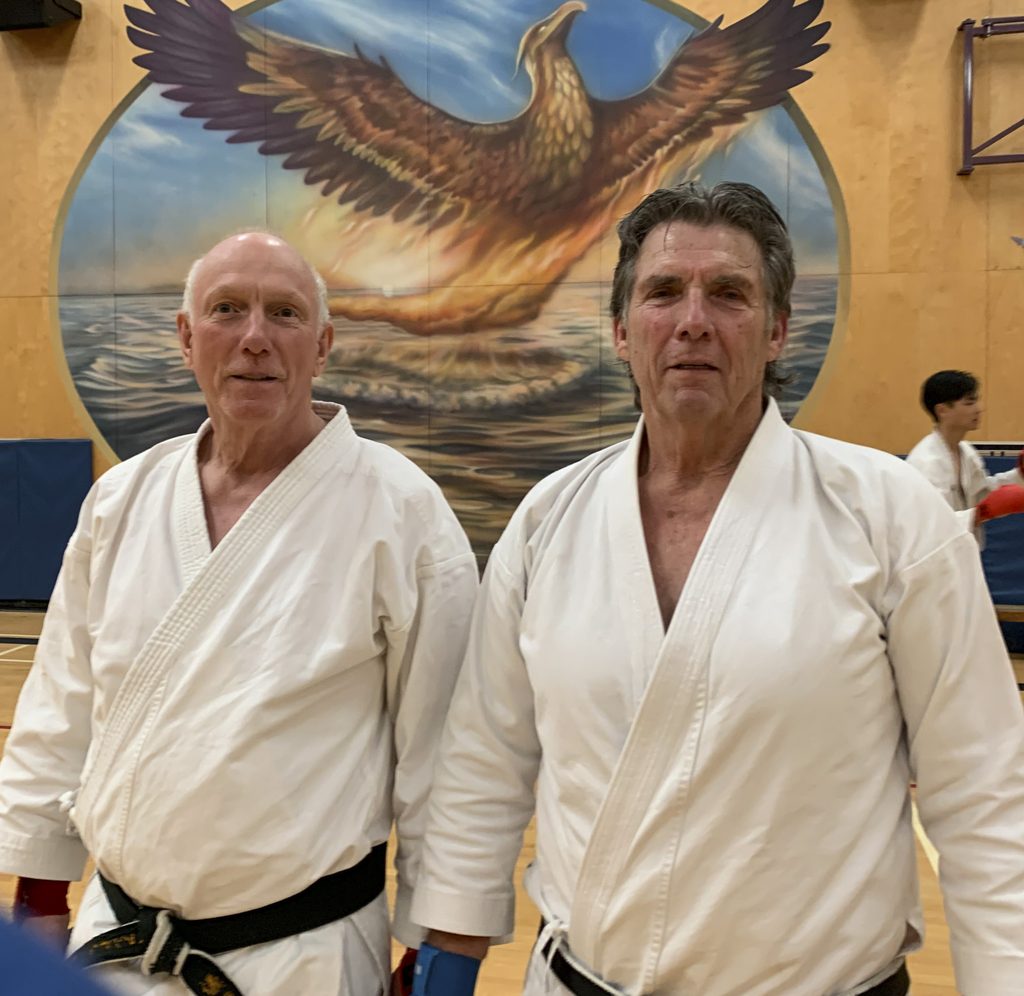
    Sensei Statz with Shodan Krystal Millard and  in the background Sensei Hawkins

    Young Inderveer received a green belt in karate but now is moving up!

    IMG_1499

    Today’s topic : Is there a need for martial arts training in private or public schools today?

    Teachers today are trained with many different management skills at their disposal, but public schools in Canada do not have martial art training as they do in Japan. Do we have the best interests of our children in mind when so many today spend so much time online, sometimes mentally active and other times in a stupor? Is this changing our children’s development? I believe it is. Congratulations must go to Mutte Chen and Luke Chen of South Surrey Karate Club, who recently passed their Nidan, or second degree black belts in Burnaby. (Luke is now an engineer in Bavaria. Mutte teaches at Grandview Heights highschool.)

    Parents have a duty and responsibility not just to find outlets for their children’s pent up behavior. They need to teach them about respect or have someone do it for them. Respect comes from self respect, the ability to defend oneself not only verbally but physically as well. What better method than from within a developmental structure like a karate class. Students must pass a set curriculum in South Surrey Karate Club or they won’t pass… more latter…

  • Black Belt Grading Syllabus and all Grading Requirements for all kyus up to Black belt

    thumbnail_IMG_0907

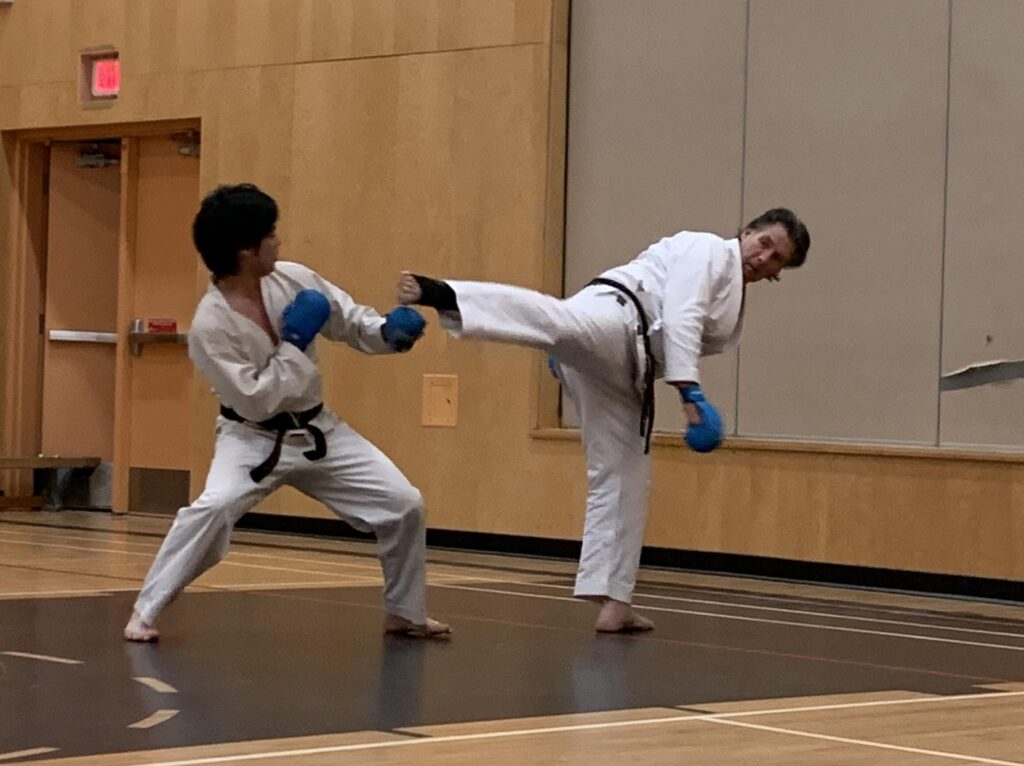
    Sensei Jim Hawkins is seen here demonstrating with another black belt that training without pain by using swimming noodles instead of a weapon can elicit critical physical responses. Martial arts training concepts are often achieved through creative applications. Major concepts such as: timing , distance, use of force, target, relaxed control instead of fight/flight, stance are difficult for the uninitiated to understand. Physical percipient response requires training, lots of training. It takes at least 6 years of training to achieve a black belt or shodan in karate.

    GRADING REQUIREMENTS for South Surrey Karate and Burnaby Karate Clubs Shiseikai

    9th Kyu

    White Belt

    TACHI-KATA

    Musubi-dachi (formal attention stance)

    Shizen-tai (natural stance or “yoi”)

    Kiba-dachi(horse stance)

    Zenkutsu-dach( basic front stance)

    Kokutsu-dachi(back stance)

    Heisoku-dachi (feet together)

    Shiko-dachi (horse stance with toes out)

    Heiko-dachi feet parallel stance)

    KATA

    Taisabaki

    Basic Techniques

    Horse stance and punch

    Jodan -face level

    Chudan -stomach level Reverse punch and block

    Front kick

    Basic Moving Techniques

    Moving forward lunge punch ; Going back, block

    Each movement starts with gedan tateken: (lower level vertical fist punch)

    Chudan uchi-uke, gyaku-zuki (inside block, reverse punch)

    Chudan soto-uke, gyaku-zuki (Outside block, reverse punch)

    1) Must have trained at least 10 sessions for adults, or 15 sessions for juniors, to qualify for this exam. 2) Must understand the basic karate stances.

    8th Kyu

    White Belt

    KIHONWAZA

    Kiba-zuki

    Gyaku-zuki to uke Mae-geri

    KIHON WAZA(moving techniques)

    Oi-zuki, zenshin; sagatte, Sono-uke, gyaku-zuki

    Mae-geri zenshin; sag atte , sono-uke, gyaku-zuki

    KATA

    Happo-geri, Heian Shodan

    Basic Moving Techniques

    Moving forward lunge punch; going back, block and reverse punch

    Moving forward front kick; going back, block and reverse punch

    1) Must have trained at least 10 sessions for adults, or 15 sessions for juniors, since passing 9th kyu exam.

    2) Must understand the basic techniques.

    3) Must demonstrate the correct kata sequences.

    7th Kyu

    Yellow Belt

    KIHON WAZA

    Kiba-zuki

    Gyaku-zuki to uke

    Mae-geri

    Yoko-geri keage

    Kokutsu-dachi, shuto-uke

    KIHON WAZA (moving technique)

    Oi-zuki, zenshin; sagatte, Sono-uke, gyaku-zuki

    Mae-geri zenshin; sagatte, sono-uke, gyaku-zuki

    Mae-gen, jodan-zuki to sono-uke, gyaku-zuki

    Kiba-dachi, yori-ashi, Yoko-geri, keage

    Jodan-chudan niren zuki to sono-uke, gyaku-zuki

    KATA

    Happo-geri ,Heian Nidan

    Grading Students:

    Basic Techniques

    Horse stance and punch

    (1)

    Jodan -face level

    (2)

    Chudan -stomach level Reverse punch and block Front kick Side snap kick Back stance, knife hand block

    Basic Moving Techniques

    Moving forward lunge punch; going back, block and reverse punch

    Moving forward front kick; going back, block and reverse punch

    Front kick, face punch; going back, block and reverse punch

    Horse stance, feet together Side snap kick

    Face and stomach punch; going back, block and reverse punch

    1) Must have trained at least 15 sessions for adults, or 25 sessions for juniors, since passing 8th kyu exam.

    2) Must have stable body balance with good techniques.

    6th Kyu

    Yellow Belt

    Basic Techniques

    Back stance, knife hand block; Front stance spear hand thrust Side thrust kick Round house kick

    Basic Moving Techniques

    Moving forward 3 punches;

    going back, block and reverse punch

    Front kick, face punch;

    going back, block and reverse punch

    Horse stance, cross feet in front,

    side thrust kick

    Round house kick

    Back stance, knife hand block

    Basic one step sparring (one

    attack). Other side block

    and reverse punch.

    1) Must have trained at least 15 sessions for adults or 25 sessions for juniors, since passing 7th kyu exam. 2) Must understand all basic points and be able to follow and absord the correct instruction of karate techniques.

    5th Kyu

    Green Belt

    KIHON WAZA

    Same as 6th kyu plus:

    Yoko-geri kekomi from zenkutsu-dachi

    100 KIHON WAZA

    Same as 6th kyu plus;

    Sanren zuki to sono-kodan

    Mae-geri, jodan-chudan-zuki to sono-kodan

    Mawashi-geri

    Yoko-geri keage(side snap kick)

    Yoko-geri kekomi(side thrust kick)

    Mae-geri, gyaku-zuki to sono-kodan(front kick and reverse punch)

    Shuto-uke, nukite (knife hand block and spear hand thrust)

    Oi-gyaku-oi-zuki (from free stance)

    KATA

    Heian Godan

    KUMITE

    Kihon Ippon Kumite (add mawashi-geri and yoko-geri kekomi)

    Grading Students:

    1) Must have trained at least 35 sessions for adults or 50 sessions for juniors,

    since passing 6th kyu exam. 2) Mawashi-geri and yoko-geri must have correct speed and power. 3) Must demonstrate correct sequences with proper speed, strength, spirit

    and good balance.

    4th Kyu

    Green Belt

    KIHONWAZA

    Same as 5th kyu

    KIHON WAZA

    Same as 5th kyu plus; Sanren-zuki to sono-kodan Mae-geri, jodan-chudan-zuki to sono-kodan Oi-gyaku-oi-zuki to sono-kodan Chudan-mae-geri, jodan-mae-geri, gyaku-zuki to sono-kodan Mae-geri, mawashi-geri, gyaku-zuki to sono-kodan Mae-geri, yoko-geri, gyaku-zuki to sono-kodan

    KATA

    Heian Sandan

    KUMITE

    Kihon Ippon Kumite

    Jiyu Ippon Kumite

    Grading Students:

    1) Must have trained at least 35 sessions for adults or 50 sessions for juniors,

    since passing 5th kyu exam. 2) Require ability over 5th kyu level in every point (see 5th kyu instructions). 3) Tachi-kata and basic techniques must be good.

    3rd Kyu

    Brown Belt

    KIHON WAZA

    Same as 4th kyu plus:

    Mae-ashi-geri, ushiro-ashi-geri

    Hiza-geri

    100 KIHON WAZA

    Sanren-zuki, zenshin to sono-kodan Mae-geri, oi-gyaku-zuki to sono-kodan Mae-geri, mawashi-geri, gyaku-zuki to sono-kodan Chudan-mae-geri, jodan-mae-geri, gyaku-zuki to sono-kodan Mae-ashi-geri, ushiro-ashi-geri to sono-kodan

    KATA

    Shitei : Tekki Shodan

    Tokui: Your favourite Heian kata

    KUMITE

    Kihon Ippon Kumite

    Jiyu Ippon Kumite

    Shiai Kumite

    Grading Students:

    1) Must have trained at least 50 sessions for adults or 70 sessions for juniors,

    since passing 4th kyu exam.

    2) Must have good control.

    3) Will be failed if three mistakes are made.

    2nd Kyu

    Brown Belt

    KIHONWAZA

    Same as 3rd kyu plus:

    Enpi-uchi

    KIHON WAZA

    Same as 3rd kyu plus:

    Yoko-geri, mawashi-geri, gyaku-zuki to sono-kodan

    Mawashi-geri, yoko-geri, gyaku-zuki to sono-kodan

    KATA

    Bassai-dai

    Tekki Shodan

    KUMITE

    Kihon lppon Kumite

    Jiyu lppon Kumite

    Shiai Kumite

    Grading Students:

    1) Must have trained at least 50 sessions for adults or 70 sessions for juniors,

    since passing 3rd kyu exam. 2) Must possess knowledge of kata’s three factors and require tactics in kumite. 3) Require very hard training and strong spirit before attempting this higher level.

    1st Kyu

    Brown Belt

    KIHON WAZA

    Same as 2nd kyu plus:

    Uraken-uchi

    Shuto-uchi

    100 KIHON WAZA

    Same as 2nd kyu plus:

    Mae-geri, mawashi-geri, uraken, gyaku-zuki,

    Mae-mawashi-geri, gyaku-zuki, neko-ashi-geri, mae-geri, gyaku-zuki

    KATA

    Shitei: Kanku-dai

    Tokui: Tekki Shodan or Bassai-dai

    KUMITE

    Jiyu Ippon Kumite

    Shiai Kumite

    Jissen Kumite

    Grading Students:

    1) Must have trained at least 50 sessions for adults or 70 sessions for juniors, since passing 2nd kyu exam. 2) Must show strength, concentration, force, intensity, and character in both kata and kumite.

    Shodan

    1st Degree

    Black Belt

    KIHON WAZA

    Sanren-zuki

    Mae-geri, jodan-chudan-zuki

    Jodan-uke, chudan soto-uke and uchi-uke, gedan-uke, gyaku-zuki

    Hiza-geri, jodan-oufuku-enpi

    Mae-geri, mawashi-geri, kansetsu-geri

    Mae-geri, yoko-geri, ushiro-geri

    IDO KIHON WAZA

    Sanren-zuki to sono-kodan

    Niren mae-geri, gyaku-zuki to sono-kodan

    Mae-geri, oi-gyaku-zuki to sono-kodan

    Mae-geri, mawashi-geri, yoko-geri, ushiro-geri, gyaku-zuki

    Mae-geri, Mawashi-geri, gyaku-zuki, uraken, yoko-geri, gyaku-zuki

    Shuto-uke, mae-ashi-geri, nukite

    KATA (3 Kata)

    Shitei: Tekki Nidan

    Jion

    Tokui: Favourite kata (Except Heian katas)

    KUMITE

    Jiyu Ippon Kumite

    Jiyu Kumite: Shiai Kumite

    Jissen Kumite

    MAKIWARA-ZUKI OR TAMESHI-WARI

    GRADING STUDENTS:

    1. Must train at least 50 sessions for adults, or 70 sessions

    for juniors since passing 1st kyu exam.

    2. Must submit a thesis of three or more pages on one of the

    following topics:

    “Karatedo: Existence and Social Life”

    “Reasons for Karatedo: Aspirations and Impressions”

    Black Belt is the path of a martial artist.

  • Now Available: Zachary: The Invisible Veil

    Zachary

    Short Bio of Your Sensei
    Sensei AW Statz is a Canadian writer, teacher, and martial artist with over thirty years of experience in both education and the dojo. He has taught literature, mythology, and history, coached hundreds of karate students, and worked in places as varied as steel mills and lumberyards.

    That wide range of experience—and one lingering question, What are young people really searching for?—inspired his first novel, Zachary: The Invisible Veil, a YA fantasy that weaves together spiritual depth, myth, and adventure.

    Sensei still teaches karate weekly and, when not writing, can be found coaching in the dojo, reading mythology with coffee in hand, or sidestepping metaphorical roundhouse kicks from his students…and occasionally, his editors.

    As a new author, choosing the right editor is a leap of faith—and choosing Kristen Hamilton was the best decision I could have made. From her first 500-word sample to her final note on “the last confusing sentence,” Kristen brought professionalism, clarity, and genuine care to every step. Her developmental insights were sharp, her line edits precise, and her encouragement steady. She didn’t just edit Zachary: The Invisible Veil—she elevated it.

    —Andrew Statz, Zachary: The Invisible Veil


    A Note for Families
    Over the years, many Christian families have come through our karate doors. While I’ve had the occasional thoughtful conversation about philosophy or values, I’ve always respected that spiritual formation begins at home. I believe a child’s beliefs—whatever their background—are best nurtured within the family. Faith, to me, is personal. It’s not for debate, but for quiet reflection, resilience, and growth.

    That’s why Zachary: The Invisible Veil doesn’t preach—it invites. It’s not a sermon—it’s a story. One that opens the imagination, stirs the heart, and asks: What if there’s more to this world than we see?

    In a world that often demands quick answers, this book dares to be patient. And history reminds us—the pendulum always swings back. The key is to be ready.

    —AW Statz


    What’s Zachary About?

    Zachary: The Invisible Veil — Synopsis

    Sixteen-year-old Zachary Switch thought he was on track for university. He had the academic record his mother hoped for. What he didn’t know was that his adoptive father, Dr. Theo Switch, had very different plans—and heavenly agents were already involved.

    Zachary is taken to the Guardian Academy, a hidden school for the children of angels. There, he discovers he is a Nephilim—descended from angels—and is plunged into a world he never imagined. Alongside his friends Rachel and Neil, Zachary is tested by the Nephilim Council, trained in battle, and given a mission that could shape the fate of the world.

    But their mission isn’t just dangerous—it’s personal. If they fail, Rachel and Neil risk being lost to the shadows beyond the Veil. As they travel to Jerusalem with Zachary’s father, truths are revealed. When the mission ends, Dr. Switch doesn’t return.

    In the months that follow, the Nephilim Council begins to question whether Zachary’s loyalties—and bloodline—pose a threat. What they discover is bigger than anyone expected: Zachary’s real father is the Angel of Death.

    And the story is just beginning. If you’d like to peek at the listing, here’s Amazon’s “Look Inside”: 

    📖📖 Available now on Amazon — Find Zachary: The Invisible Veil on Amazon https://www.amazon.ca/dp/B0FLV37J55

  • The History and Spirit of South Surrey Karate Club

    For over 40 years, South Surrey Karate Club has built a reputation for traditional training, strong values, and community spirit. Rooted in Shisei-Kai Karate Canada and Gima-Ha, the club continues to uphold the teachings passed down through generations of dedicated martial artists.

    A Legacy of Leadership

    Our lineage connects directly to James Johnson (7th Dan)—a member of the Sports Hall of Fame for his outstanding achievements in kumite (karate fighting). Johnson Sensei, the retired chief instructor of Burnaby Karate Club, remains a guiding influence through his leadership and philosophy.

    Today, Sensei Frank Mostad leads Burnaby Dojo, while Ray Wong, former Shisei-Kai technical advisor and examiner, occasionally trains with us—bringing together karate and modern mixed martial arts.

    Meet the South Surrey Instructors

    At the helm is Sensei Andrew Statz (6th Dan), a retired teacher, high school coach, and lifelong martial artist. His background in judo, karate, and jujitsu gives his instruction both depth and perspective. Sensei Statz trained for over twenty years under Tak Samishima, blending “old school” discipline with a coach’s insight and compassion.

    Supporting him is Sensei Jim Hawkins (4th Dan Shotokan), known for his steady guidance, technical precision, and dry humor that keeps classes both challenging and fun. Together, they’ve created a dojo where students of all ages feel welcome, supported, and inspired.

    Training That Builds More Than Strength

    Karate at South Surrey isn’t just about kicks and punches—it’s about character, focus, and perseverance. Students develop:

    • Confidence and discipline that carry into school and life

    • Physical coordination, balance, and flexibility

    • Awareness and self-defense skills grounded in respect

    Many of our families train together—parents and children side by side—building bonds that last a lifetime.

    Our Black Belt Lineage

    The South Surrey Karate Club is proud to have produced many black belts, including:
    Lucas Reddy (Nidan), Ryan Halladay, David Rhodes, Chris Millard, Cara Statz, Mitch Webb, Adam Reddy, James Anderson, Krystal Millard, Luke Chen, and Mutte Chen—all dedicated practitioners who carry forward the dojo spirit.

    Our Dojo

    Training takes place at Pacific Heights Elementary School (17148–26th Ave), a bright, welcoming gym with a sprung wooden floor—perfect for young knees and old warriors alike.

    Ready to Begin Your Journey?

    If you’ve ever considered martial arts, there’s no better time—or place—to start.
    Join us for a free trial class, bring a friend, and experience why generations of students have called South Surrey Karate Club their second home.

    Karate is more than a sport—it’s a way of life.
    Come train, grow, and discover your potential.

    South Surrey Karate Club
    📍 Pacific Heights Elementary School, 17148–26 Ave, Surrey, BC
    📧 statzandrew8@gmail.com
    👊 “Train hard. Stay humble. Live with purpose.

  • Japan

    thumbnail_PHOTO-2019-07-24-10-25-36F2QGFHRDthumbnail_PHOTO-2019-07-24-10-25-36[7]thumbnail_PHOTO-2019-07-24-10-25-36[10]PHOTO-2019-07-24-10-25-36thumbnail_PHOTO-2019-07-24-10-25-362CMMFSH5  thumbnail_IMG_2298[2]PHOTO-2019-07-24-10-25-36[5]

    The above pictures were from South Surrey’s last trip with James Anderson(Shodan), Luke Chen (Shodan), and Jordan Creech

     This past year, 2024, South Surrey Karate Club’s most recent trip to Japan was cancelled.


  • An Essay from South Surrey Karate Club

    The Future and the Fullness of Karate: Rokudan Essay originally published July 11th, 2018

                                                                         By Andrew Statz

    The future of Karate is an important subject that deserves consideration from all practitioners of karate. Karate as stated by most traditional martial artists means ‘kara’ (empty) and ‘te’ (hand) as the two Chinese characters, and can accordingly be translated most literally as ‘empty hand’. There exists another interpretation, however, one recently described by Shihan Mitsunori Kobayashi. According to Kobayashi, ‘kun’ the character that forms the first participle, can more accurately be described as ‘fullness’. Fullness, therefore, is the primary meaning of karate-do: it is an all-encompassing way of life, a method of instruction, an embodiment of a principle that is boundless. This might sound like artistic language, but the fullness of karate properly perceived is artistic: its real definition is not beyond expression, other than to say it means everything.

    Regrettably, the karate we see in movies barters the metaphysical for the physical. In popular film, karate is a means to an end: a way to end the bad guy, or the form used by the bad guy to hurt the good. In the public imagination, ‘karate’ certainly doesn’t mean the fullness of life; to state this would be a topic met with derision. The multifaceted art that is karate is instead presented as utilitarian, at best. The reasons for the simplistic analysis given to the public is that it is most easily understood as another fighting style. Poor PR, the media’s ‘shock-and-awe’ movie depictions, and the prevalence of clubs that practice nothing other than ‘sport karate’, or kick and punch, are all factors that contribute to a bastardized understanding of what ‘karate’ is. Any proper analysis of karate will refer to something much broader and inclusive: from the ‘kun’, or fullness, one arrives at the suffix ‘do’, yet another reference to a way of life, karatedo. The history, the millions of individuals who presently train, and today’s youth are the future of karatedo.

    Before karate appeared in the Okinawan Islands there was a popular theory that Bodiharma had travelled to China and brought with him a form of the martial arts along with Buddhism. The origins of karate in Japan in the Ryukyuan Islands with either Anko Itosu or Gichin Funakoshi, the latter acknowledged for spreading the martial arts in Japanese school system are obscured by time. Master Makoto Gima was the student of Gichin Funakoshi and learned from him his karate skills. He learned his throwing techniques for example and modified them to suit his judo background.  Funakoshi was training secretly in karate because karate was banned on the islands, but after it was legalized, he began teaching in Japan. Funakoshi lived during the Meiji period when major scientific, technological and cultural changes shook the fabric of life throughout Japan. Legalized karate underwent a name change from “Chinese hand” to “empty hand”. The person practising karate not only had no weapons but struggled with a distinctly Zen Buddhist idea of perfecting oneself. Individuals such as Funakoshi put on demonstrations and as popularity grew he became a regular instructor at the university level in Japan. Numbers grew.

    The origins of karate in Canada were the same as many other countries around the world. Instructors were either sent out from Japan or originated in Canada like Masami Tsuruoka who was born in Cumberland, British Columbia. The Tsuruoka family was placed in an Internment Camp in Tashimi, BC during World War 2. After the war he moved back to Japan where he studied Chito-ryu karate under Dr. Tsuyoshi Chitose and received his first black belt. When he returned to Canada he helped found the National Karate Association and opened a dojo in Toronto. With over 10,000 members, the NKA has many styles of Karate including Goju-ryu, Shito-ryu, Shotokan, Wado-ryu and Chito-ryu, the founding style in Canada. Shihan Hidetada Narumi moved to Canada and taught karate throughout the lower mainland during the 1980’s. Today many people are looking back and studying karate’s history. Hopefully their studies will go beyond critical analysis of techniques, styles and tournaments to what karatedo really means.

    It must be noted that specific individuals, Itosu, Funakoshi, and Master Gima provided both the impetus for the development of karate and for its initial curriculum. Karate was built by the ancient masters to exemplify the “habitual acts for physical violence,” which transformed into the core curriculum of large karate organizations today. But they also realized how one must live one’s daily life. Karate if studied properly will affect everything that one does including what one’s choices are. The recent  Olympics  rejuvenated  “sport karate” and brought many opportunities for individuals and organizations draw on this impetus. What directions that result from this are not known, but it is exciting.


    The history of karate as it appeared on the Okinawan Island gives a glimpse at the development of a philosophy. In order for karate to survive, something of the all-encompassing ‘fullness’ that is the ‘kun’ will need to be revitalized. Youth in clubs are eager to learn: perhaps they sense the deficit of value that is presented to them today in culture. There is a thirst to know something of an art that can inform and shape an individual and place him as a participant in a rich history. Accordingly, senseis increasingly have to grapple with a culture that privileges quick fixes and flashy sensationalism in sport – but this, undeniably, is not sustainable. Those individuals that are lost in a club to such siren calls inevitably do return, seeking the fullness that karate-do implicitly promises. One way of fostering that connection to the immortality of karate-do is to impart the value in teaching. Whether it’s a green belt who you ask to help teach the whole class, a small group or partner one on one, all senior belts should be asked to teach. Teaching promotes learning, develops self-esteem and enables senior belts the opportunity verbalize the technical abilities they know to be true and have worked for them. As all Karate instructors will know well, teaching may seem to ostensibly be to help the student, but it is the teacher who is taught as well: even inferior ability practitioners can make the best teachers, even if they cannot model the technique as well as others. Indeed, handicaps and deficiency can teach students how to make the best of what they are born with. Provided that real attempts at exercise are made, and the student is not simply lazy, the less able-bodied student can become confident in the abilities they do have. Nor is this simply a legacy of the young: the old can equally find karate a teacher, as the kicks that once came easily will have to be substituted for other strengths. Karate training requires acceptance, as much as it pushes you to survive and adapt. Harnessing one’s strengths, as all karate teachers will understand, is a developing skill and it is a good idea for the chief instructor to relinquish control so he can supervise others in various teaching situations. Over time when tasked with instruction senior belts will develop communication skill confidence and be able to not only help the less capable but improve themselves.

    The easy counterargument, one heard too often perhaps, is the lament that things were simpler once. There is a danger of romanticizing the past of karate, where the ‘fullness’ of the art could be witnessed by those even who did not practice it. While it is undeniably the case that a homogenous island hundreds of years ago experienced the ‘way’ of karate in a manner that would be foreign to us, it is crucial to establish that karate never ends. In the modern world, clubs come and clubs fold, but there is always someone who wants to keep the mantle burning. If even the relatively few clubs that practice traditional karate exist, there will be those who appreciate it and see it for the art that is worth preserving. The challenge of keeping this legacy open for the modern world bears its own challenges. How does one maintain the ‘kun’, an all-compassing club in a twenty-first century world that highlights distractions and juggling multiple jobs at once? Financing is another burden facing small clubs. Spending money is easy. Where to spend money is harder. How does one get back any returns for what is being spent? Are marketing and advertising necessary for the club to grow or does word of mouth, emails, texting and making good use of the internet important. Questions such as these threaten to dilute the philosophy that is behind karate – clearly, money cannot be the only criterion for running a club. Where does one acquire the expertise to not only run a club, but teach, collect fees, set up tournaments, follow the prescribed curriculum and creatively develop new curriculum, counsel students and adults? And how is all that to be accomplished by one person, two, three or more when the pay is low or non-existent and the people training need to be helped to reach their potential. This requires commitment. It demands a lot of thought and work. What sort of fullness can be gleaned when karate is treated as an hour long session, ending when one leaves the dojo? The future of karate can rectify some of these problems by emphasizing teaching. As stated previously, the lineage of passing on to a junior member or members the responsibility of continuing to teach karate is vital. Not only must they teach karate they must pass on the karatedo, the way of life. Teaching techniques is the easy part. Having karate be part of your life and life’s work is a step few people make or even understand because it requires commitment. Today it seems that commitment to anything is unusual. Commitment to sending emails out prior to a grading, a Shiai or a special event is always a challenge, but often there are few that can do this with a minimum of expertise.

    Ultimately, a club survives from the students attending and immersing themselves in the fullness of karate. Many parents, sitting behind and observing or participating themselves, recognize the dynamic changes that can occur when karate is integrated in their children’s lives. The diversity of interests that are available to students can be a challenge: other sports, work and most importantly schooling act as both a deterrent and an aid to a young karateka’s progress in karate. It is my experience that these interests come and go: I have seen many karateka return to karate training. This is the surest proof that karate offers something more, something akin to a lifeblood that sustains the participant. As stated before, karate can be translated as an empty hand – but as I have been attempting to describe, the fullness is the gift that it offers all of us – if we are only willing to engage with it.